
What to Eat on a Daniel Fast: Complete Food List
After many years of practicing the Daniel Fast and sharing resources, I regularly hear questions from friends and readers about what to eat.
On a Daniel Fast, you'll primarily eat whole, plant-based foods: vegetables, fruits, whole grains, beans and legumes, nuts and seeds. You'll avoid meat and animal foods, sugars, highly processed foods, alcohol, and any other foods you've committed to abstain from during your fast.
That's the short answer. The rest of this guide walks through exactly what to eat on a Daniel Fast—from the grocery store to your plate to the nutrition label.
This article is focused specifically on food — what's included, what's excluded, and how to handle the gray areas in between.
You might also be looking for:
The biblical background, recommended length, and how to spiritually prepare for a fast → Daniel Fast Guidelines
An example of day-by-day menus → Daniel Fast Meal Plan
Recipes you can cook this week → Daniel Fast Recipes
Here, we're talking about what goes on your plate
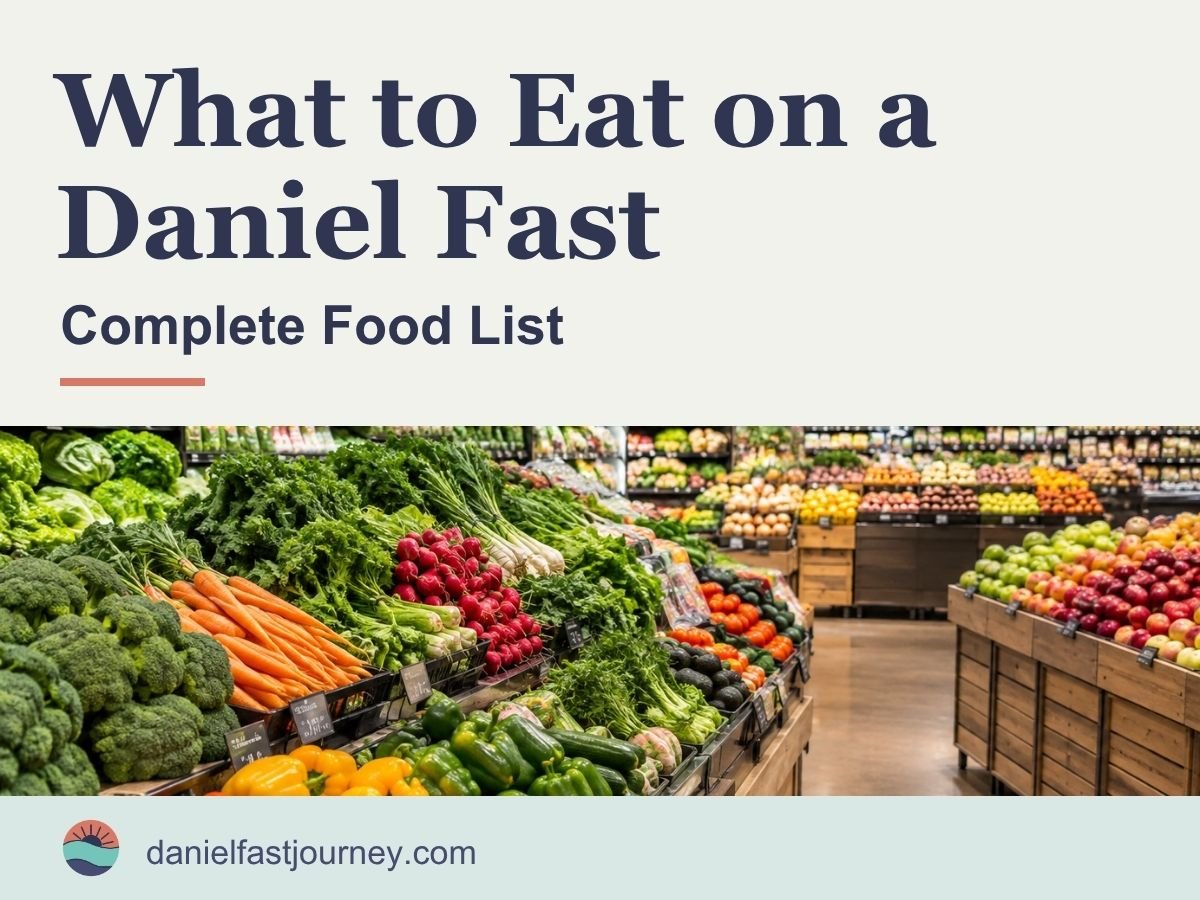
What Foods Can You Eat on a Daniel Fast?
Daniel Fast foods are from the ground and haven't been altered much. At its core, the Daniel Fast food philosophy comes down to three principles:
Whole
Plant-based
Minimally processed
Over 2,600 years ago, the Bible says Daniel was taken captive and ate in the king's court. The three experiences of fasting you see in the book of Daniel are
“Please test your servants for ten days: Give us nothing but vegetables to eat and water to drink.” Daniel 1:12
“So I turned to the Lord God and pleaded with him in prayer and petition, in fasting, and in sackcloth and ashes.” Daniel 9:3
At that time I, Daniel, mourned for three weeks. I ate no choice food; no meat or wine touched my lips; and I used no lotions at all until the three weeks were over. - Daniel 10:2-3
We don’t have a detailed list in the Bible of the exact "vegetables" and "pulse" he was given when he refused the king's food.
So rather than trying to recreate his exact menu, a modern Daniel Fast applies his principle: abstain from meat, wine, and the richest foods available, and eat simply.
Here is a Daniel Fast food list.
Vegetables
All vegetables are included on the Daniel Fast — fresh, frozen, canned, or dried, as long as you check ingredient labels on the canned and dried varieties for added salt, sugar, or preservatives.
Here are examples with a breakdown by category:
Leafy greens: spinach, kale, lettuce, arugula, Swiss chard, collard greens, mustard greens
Cruciferous vegetables: broccoli, cauliflower, cabbage, Brussels sprouts, bok choy
Root vegetables: potatoes, sweet potatoes, carrots, beets, turnips, radishes
Other vegetables: asparagus, bell peppers, cucumber, zucchini and summer squash, mushrooms, tomatoes, onions and garlic, celery, corn, green beans, peas, artichokes, eggplant, okra
A quick note on form:
Fresh — always a great option, and best if you're only shopping a few days ahead.
Frozen — usually flash-frozen right after harvest, so nutrition holds up well. Can be a vital resource and time-saver on a Daniel Fast.
Canned — fine, just check for added salt, sauces, or preservatives.
Boxes or Bags — same rule as canned; examples are whole grains or beans.
Dried — check for added sugar or oil, especially with things like sun-dried tomatoes.
Fruits
All fruit is included on a Daniel Fast:
apples, bananas, berries, citrus, melons, grapes, pineapple, mango, dates, figs, and more.
Look for fresh, frozen, canned, or dried form.
Slow down with packaged and dried fruit. Dried cranberries often have added sugar. Canned peaches or pineapple may be packed in syrup rather than juice or water.
Read the ingredient list, not just the front of the package. It may say “made with real fruit" but sugar may have been added on top of it.
If you're eating a lot of dried fruit, keep portions modest. It's more calorie- and sugar-dense than fresh fruit because the water has been removed, so a handful of raisins packs a lot more concentrated natural sugar than a handful of grapes.
Whole Grains
Whole grains represent one of the biggest shifts from a typical Western diet to a Daniel Fast, mostly because so much of what we eat day to day is refined rather than whole.
Included on a Daniel Fast:
Brown rice
Oats (steel-cut is best)
Quinoa
Barley
Farro
Bulgur
Millet
Amaranth
Grits or polenta (100% cornmeal, unsweetened)
Whole wheat and other whole-grain products
Whole grain vs. refined grain matters more than which specific grain you pick.
Whole grain still has all three original parts of the kernel—the bran, the germ, and the endosperm—which is where the fiber, B vitamins, and minerals live.
Refined grains, like white rice and white flour, have had the bran and germ stripped away, leaving mostly starch behind.
Beans, Peas & Legumes
This category deserves its own spotlight, because it's doing a lot of the nutritional heavy lifting on a Daniel Fast. With meat, dairy, and eggs off the table, beans and legumes become one of your primary sources of protein and iron.
Options include:
Black beans, kidney beans, pinto beans, white beans (cannellini, great northern)
Chickpeas or garbanzo beans
Lentils
Black-eyed peas
Green peas and split peas
Soybeans and edamame
Dried or canned both work. Dried beans are cheaper and have no added sodium, but take some planning — soaking and longer cook times.
Canned beans, like pinto beans, are the fast weeknight option. Rinse them well to cut down on sodium, and check the label for any surprise added ingredients.
Nuts & Seeds
Whole nuts and seeds fit cleanly into the "whole, plant-based" framework: almonds, walnuts, cashews, pecans, pistachios, Brazil nuts, hazelnuts, pumpkin seeds, sunflower seeds, sesame seeds, chia seeds, and flaxseed are all included.
Nut and seed butters are a slightly different story. Nuts aren’t a problem, but many jarred nut butters contain added sugar, salt, hydrogenated oils, or other additives.
A natural, raw, or freshly ground nut butter is different from a shelf-stable, sweetened one.
Larger grocery stores (and natural food stores) often have grinders on the natural food in bins row. In these devices, you can see almonds or peanuts on the top, which are ground through to emerge as a “nut butter.”
This is genuinely a gray area, and we'll come back to it below, because how strict you want to be here is a personal call.
Herbs, Spices & Seasonings
Easy to overlook, but this is the difference between food that tastes like cardboard and food you actually look forward to eating.
Fresh herbs: basil, cilantro, parsley, dill, mint, rosemary, thyme
Dried herbs and spices: cumin, paprika, cinnamon, turmeric, oregano, chili powder, garlic powder
Fresh garlic and ginger
Sea salt or Himalayan salt
“Fresh” means it’s typically found in the produce section.
Salt itself is included on a Daniel Fast. It isn't a sweetener, an animal product, or a processed additive, and it shows up right alongside grains and produce in biblical-era food references.
Use it as a simple seasoning — in your meals, not as a loophole for highly processed, salt-laden snack foods.
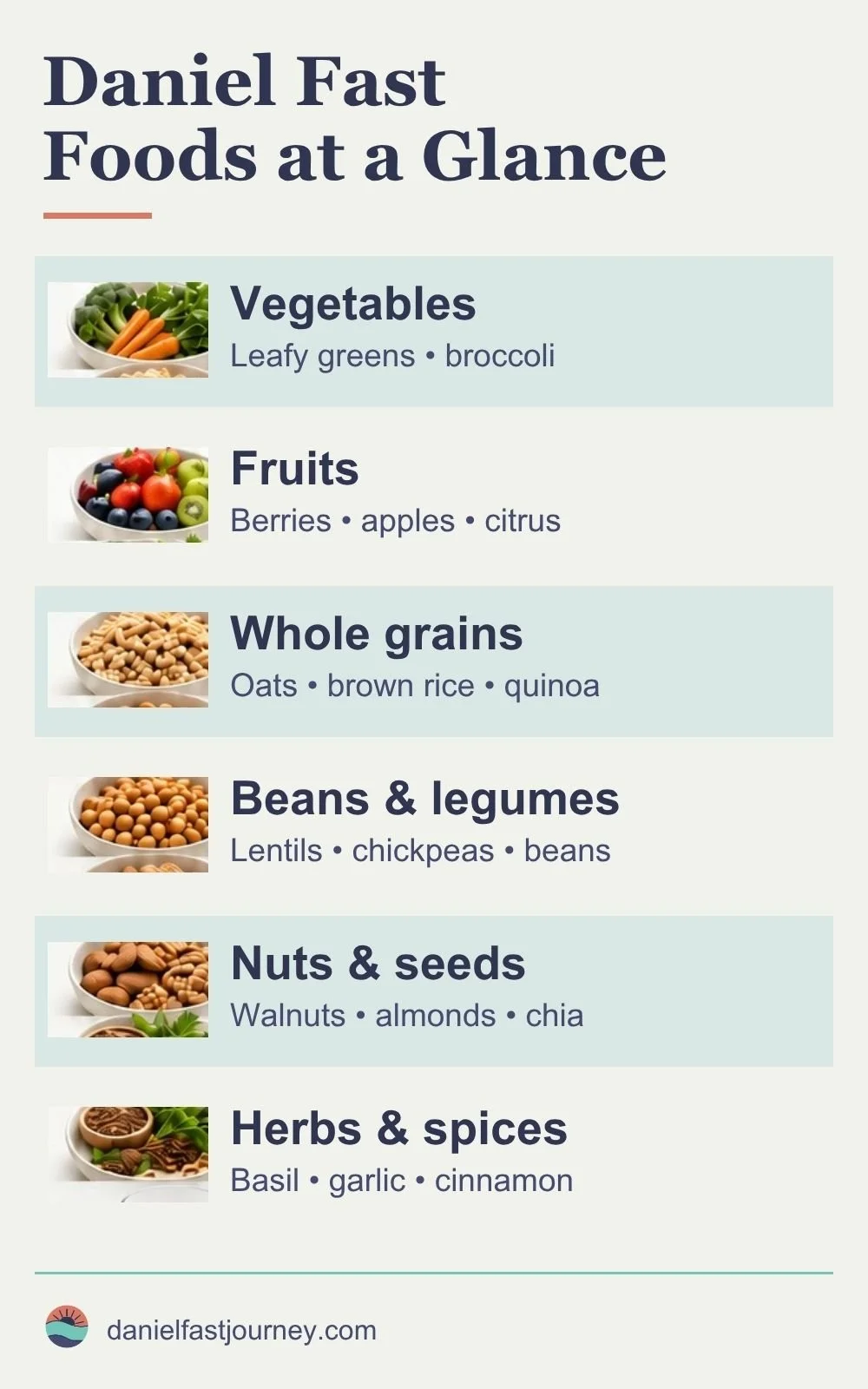
Simple list of Daniel Fast foods
What Foods to Avoid on a Daniel Fast
The "avoid" list is pretty much everything not featured on the "include" list: any foods that aren't whole and plant-based.
Meat, Fish & Animal Products
This is the most explicit exclusion in the biblical text — Daniel specifically refused the king's meat.
Our modern Daniel Fast abstains from beef, pork, lamb, poultry, and all seafood, including shellfish.
At the grocery store, this also means checking broths, bouillon, gravies, and pre-made soups, which frequently contain chicken or beef stock even when the front label doesn't advertise it.
Dairy Products
Milk, cheese, butter, cream, yogurt, ice cream, and sour cream are all excluded.
This one takes a little more label reading than you might expect because dairy can appear in packaged foods under less obvious names. Even some products labeled ‘non-dairy’ may contain ingredients such as casein or whey.
Eggs
Eggs and anything made with eggs, which includes mayonnaise, many sauces, and most baked goods.
Plant-based substitutes such as a flax ‘egg,’ chia ‘egg,’ mashed banana, or applesauce can sometimes replace eggs in cooking and baking..
Added Sugar & Sweeteners
Added sweeteners aren't limited to white and brown sugar. They also include honey, agave, maple syrup, molasses, corn syrup, and artificial or non-nutritive sweeteners.
Although we see “Daniel Fast Desserts” online and in some books, I personally don’t believe that ‘desserts’ are part of a fast.
Highly Processed Foods
Chips, crackers, most packaged snack bars, and other heavily processed items are generally excluded. Usually, they have preservative ingredients so they don’t go bad.
Baked Goods and Leavened Bread
Most modern Daniel Fast guidelines exclude breads made with yeast, along with cakes, cookies, muffins, rolls, and other baked goods. Some approaches allow simple unleavened whole-grain breads or flatbreads.
Alcohol
Wine and all other alcoholic beverages are excluded — the other half of Daniel's original refusal, right alongside the king's meat.
Coffee, Soda and Other Drinks
Water is the primary beverage on a Daniel Fast. Coffee, caffeinated tea, energy drinks, soda, and other carbonated or sweetened beverages are excluded.
Caffeine-free herbal tea, with no added sweetener, is often treated as an acceptable exception. Sometimes people on the Daniel Fast only drink water.
How to Read Food Labels on a Daniel Fast
This is genuinely one of the most useful skills you can bring into your fast, because so many "healthy-looking" packaged foods sneak in ingredients that don't belong.
Granola, protein bars, and flavored oatmeal packets are common culprits. They look like whole foods on the front of the package and read very differently once you flip it over.
Start With the Ingredient List
The front of a package can say "natural," "plant-based," or "whole grain" and still contain sugar, dairy, or preservatives. Skip the marketing claims and go straight to the ingredient list, the only place that tells you what's actually inside.
Watch for Added Sugar
Sugar hides under many names. Common ones to look for:
Sugar, cane sugar, brown sugar
Corn syrup, high-fructose corn syrup
Maple syrup, honey, agave nectar
Dextrose, maltose, sucrose
Most ingredients ending in "-ose"
Look for Animal-Based Ingredients
Dairy and egg ingredients don't always say "milk" or "egg" plainly. Watch for:
Milk, whey, casein, lactose
Butter, cream, ghee
Egg, egg whites, albumin
Gelatin (an animal product often hiding in gummy vitamins and some marshmallow-based items)
Decide How You'll Handle Processed Ingredients
Once you've screened out sugar and animal products, you'll still likely hit a gray zone — things that are technically plant-based but processed, like maltodextrin, "natural flavors," or preservatives.
This is exactly where you want a personal standard already in place, rather than deciding item by item while standing in the aisle. That's what the next section is for.

Common Debatable Foods on a Daniel Fast
Arguing about every specific item to eat on a Daniel Fast is, in my opinion, a general waste of time. The purpose of a Christian fast is spiritual, and the time and focus are on God.
The Bible doesn't hand us a modern grocery list. A number of foods land in a gray area. And sincere, careful people end up in different places.
The most useful thing you can do is decide your own boundaries before your fast starts, rather than negotiating with yourself in the cereal aisle when you're hungry and short on time.
Here's how some of the most common questions about gray-area foods tend to shake out, so you can make an informed call for your own fast.
Can You Have Oil on a Daniel Fast?
Yes. Pure plant-based oils — olive, avocado, grapeseed, sesame — are widely included, since they come directly from a plant. Some people limit themselves to light sautéing rather than deep-frying, in keeping with the spirit of simplicity, but oil itself isn't excluded.
Can You Have Peanut Butter or Nut Butter?
Peanuts and other nuts are plant-based, so many people include natural, minimally processed nut butter without a second thought.
Others prefer to avoid all packaged, processed foods — including nut butter — and either skip it entirely or grind their own fresh from whole nuts. Both approaches are reasonable. Decide which one is yours going in, and if you do include it, check the label for added sugar or oil.
Can You Have Almond Milk or Other Plant Milks?
Many people include unsweetened almond, oat, rice, or coconut milk in limited ways. Two things to check: make sure it's unsweetened, and know that plant milks are processed to some degree — so if you're following a stricter, less-processed version of the fast, you may choose to skip them.
Can You Have Vinegar?
Yes, for some kinds. Distilled vinegar typically doesn't contain yeast and is considered fine. Some people choose to avoid all fermented ingredients — including vinegar — out of caution, since vinegar is technically a fermented product. If you want to be extra careful, look into the specific type you're using; balsamic vinegar, for instance, may also contain added sugar.
Can You Eat Tofu or Tempeh?
Tofu and tempeh are often included as plant-based protein sources. Tempeh may be more debatable for people who choose to avoid fermented or more processed foods during their fast.
Some people have separate concerns about soy, either about processing methods or hormone effects, and choose to limit or avoid it for that reason. That's more of a personal health decision than a Daniel Fast rule, so factor in your own body and any medical guidance you've received.
Can You Eat Bread or Tortillas?
Standard yeast bread is excluded. Unleavened bread that is made without yeast, sugar, or preservatives can fit, depending on how strictly you're interpreting the fast.
Corn tortillas are a popular Daniel Fast–friendly option since they're typically unleavened and made from a whole grain; just check the ingredient list for added oils or preservatives.
Can You Use Plant-Based Protein Powder?
Vegan protein powders contain no animal products, but they're a processed food, often with added flavoring, sweeteners, or preservatives.
If you're following a more relaxed approach focused mainly on cutting out animal products and added sugar, a clean, unsweetened option may fit. If you're following a stricter, whole-foods-only approach, this is one to skip in favor of getting protein from beans, lentils, and whole grains instead.
Can You Drink Herbal Tea?
Herbal tea (caffeine-free, no added sweetener) is one of the most common exceptions to "water only," and plenty of people enjoy it freely throughout their fast.
What About Packaged Foods?
This is really the question behind all the questions above. Some Daniel Fast approaches allow any packaged food that avoids animal products, added sugar, and alcohol. Examples are canned beans, hummus, or a veggie burger.
Others take a stricter view and skip packaged, processed foods altogether. What matters is deciding ahead of time which one you're doing, so you're not making that call hungry, in the store, holding a bag of tortilla chips.
How to Build a Balanced Daniel Fast Meal
Once you know what's on your list, the easiest way to build a meal is to work through a simple formula rather than reinventing a new recipe every time. Creating foods in bulk and repeating meals will make your process much easier.
Start with vegetables. Make them the largest part of your plate.
Add a plant-based protein. Beans, lentils, chickpeas, or tofu.
Add a whole grain or starchy vegetable. Brown rice, quinoa, farro, or a sweet potato.
Add nuts, seeds, or another healthy fat. A drizzle of olive oil, a spoonful of pumpkin seeds, or a few slices of avocado.
Season well. Fresh herbs, garlic, citrus, and spices keep a plant-based, sugar-free plate from tasting bland.
A few examples of what that looks like in practice:
Breakfast: steel-cut oatmeal topped with berries and walnuts
Lunch: a quinoa bowl with chickpeas, roasted vegetables, and a lemon dressing
Dinner: brown rice with black beans, sautéed peppers and onions, and avocado
Need the whole week mapped out for you? See our Daniel Fast Recipes for specific dishes to try.
Daniel Fast Grocery List
Two general guidelines I follow are the choice and amount of foods:
Buy foods you will eat. I don’t like black-eyed peas, but black beans and lentils are fine. I’ve never tried mustard greens, but I know I like lettuce and arugula. You might try some new things, but this isn’t the best time to experiment and spend tons of time in the kitchen with new recipes.
Buy a reasonable amount. A massive amount of fruits and vegetables could rot or go bad if you don’t eat them in time. Amounts depend on the number of people you have, how much of one recipe you’ll cook, and what specific foods. Frozen fruits and vegetables could help out.
Here's a quick-reference potential list to take with you to the store:
Produce: leafy greens, broccoli, cauliflower, peppers, sweet potatoes, onions, garlic, tomatoes, apples, berries, bananas, citrus
Whole Grains: brown rice, oats, quinoa, barley, farro
Beans & Legumes: black beans, chickpeas, lentils, kidney beans
Nuts & Seeds: almonds, walnuts, cashews, sunflower seeds, chia seeds
Pantry: olive oil, unsweetened plant milk, herbs and spices, sea salt, low-sodium vegetable broth
Frozen: mixed vegetables, berries, plain frozen fruit for smoothies
Daniel Fast Food FAQs
Can I eat potatoes on the Daniel Fast? Yes, white and sweet potatoes are both included as vegetables.
Can I eat French fries on the Daniel Fast? I would say no; they usually contain preservatives. Cutting potatoes at home and cooking in the air fryer or baking in the oven are technically just “potatoes.”
Can I eat rice? Brown rice, yes. White rice is a refined grain and isn't part of the fast.
Can I eat bread? Standard yeast bread, no. Unleavened, whole-grain bread or flatbread may fit depending on the approach you've chosen — see the gray-area section above.
Can I eat peanut butter? Debatable. Many people include natural, unsweetened peanut butter; others avoid all processed foods, including nut butter. Decide ahead of time which camp you're in.
Can I drink coffee? Coffee and other caffeinated beverages are excluded.
Can I drink tea? Caffeine-free herbal tea is generally fine. Caffeinated tea is not.
Can I use olive oil? Yes, along with other pure plant-based oils.
Can I eat pasta? Whole-grain pasta made without eggs fits the guidelines. Regular pasta made from refined white flour and eggs doesn't.
Can I eat tofu? Debatable. Tofu is a commonly included plant-based protein.
Can I use almond milk? Debatable. If yes, it should be unsweetened and have minimal ingredients.
Can I eat canned or frozen vegetables? Yes, just check the label on canned vegetables for added salt or sauces.
Can I eat at restaurants? It's harder, but not impossible. Look for simple vegetable, bean, and grain-based dishes, ask for no butter or oil-based sauces if you're being strict, and don't be afraid to check a menu online ahead of time or ask your server questions.
Keep the Food Simple—and Keep the Fast Spiritual
It's easy for a Daniel Fast to turn into an ingredient audit — nervously scanning labels, debating whether a specific cracker counts, losing an afternoon to research a question about vinegar.
If that's where you find yourself, it's worth stepping back.
The whole point of deciding your food boundaries ahead of time is so that food requires less of your attention during the fast, not more.
Once you know what you're eating and why, you're free to spend your actual time and energy on the part of the fast that matters most: prayer, scripture, and drawing closer to God.
If you haven't yet, that's where I'd point you next — to the Daniel Fast Guidelines for the biblical foundation behind this fast, and why the food has only ever been a means, not the point.
Daniel Fast Recipes page
From here, your greatest resource is the Daniel Fast recipes and eating plan page. You can create a very doable meal plan with these simple recipes.
Check it out » Daniel Fast Recipes and meal plan
We talk about these abstaining and limiting filters in more detail in the Daniel Fast Journey book. If you’re interested in learning more, check out the book here.
